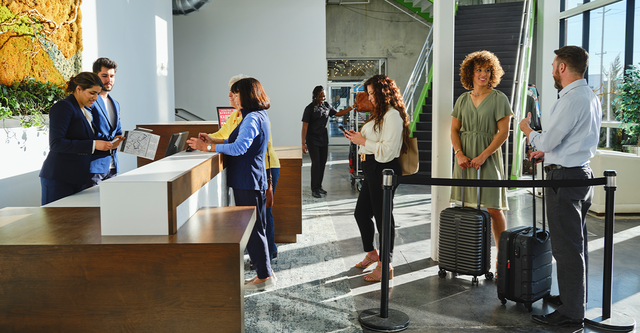
Hospitality is all about making guests feel valued and cared for through every part of their experience. Meeting that expectation requires more than warm service at the front desk or friendly interactions in dining or entertainment spaces. Behind the scenes, the strength of an organization depends on how well its operations run and how effectively its technology supports both staff and guests. Businesses that rely on flexible, modular systems are able to keep pace with new demands while protecting the consistency of the guest experience. Modularity creates this kind of foundation by allowing providers to adapt over time without sacrificing the quality that defines hospitality.
Why Modularity Matters in Hospitality
For years, updating hospitality systems often meant costly upgrades that disrupted daily operations, leaving businesses stuck with outdated technology long after it no longer met guest expectations. Today’s guests expect service that is personalized, seamless, and supported by technology. They want mobile interactions that feel seamless and loyalty programs that feel personalized. Modularity makes it possible to deliver on these expectations without replacing entire systems at once.
A modular platform lets businesses move forward in deliberate steps. Providers can start by adding mobile ordering to ease peak demand, expand payment options to reach broader audiences, or introduce analytics that anticipate guest needs. Each step integrates smoothly, allowing operations to continue while the guest experience improves in visible and meaningful ways.

Driving Operational Agility with Modularity
Agility is one of the greatest strengths of a modular approach. Hospitality businesses must continually adjust to shifting regulations, staffing challenges, and changes in demand. A modular system provides the flexibility to make those adjustments quickly while keeping service standards intact.
Operators can ease the workload of staff by offering more self-service tools. For example, they can introduce digital concierge capabilities or expand booking systems without waiting for large-scale overhauls. This technology can also scale proven solutions across multiple properties without duplicating unnecessary costs. This type of agility allows providers to meet challenges head-on while ensuring that guests continue to receive consistent and reliable service.
Creating Guest Journeys That Stand Out
Every guest interacts with hospitality differently. Some focus on speed and efficiency, while others look for personalization or exclusivity. Modularity gives businesses the tools to meet these needs in ways that feel intentional and authentic.
A provider might strengthen its loyalty offerings, highlight sustainability initiatives, or make services easier to access for a wider audience. Each of these choices reflects the priorities of the brand while addressing the preferences of specific guest groups. Because modular systems can be adjusted and expanded, they make it possible to create guest journeys that stand apart without sacrificing consistency across the broader experience.
Building for Growth That Lasts
Hospitality is an industry built on trust and loyalty, and both depend on a guest experience that feels effortless and rewarding. Modularity offers a way for businesses to uphold that standard while preparing for the future. It supports innovation without disruption, growth without unnecessary risk, and consistency without compromise.
Leaders who embrace modular strategies are not just simply responding to change. They are shaping the direction of hospitality itself. With systems that adapt and improve over time, associates can create experiences that guests remember, services that inspire loyalty, and environments that keep people coming back. That is what it means to be truly future-ready in hospitality.
{}
TCx® 820
Create exceptional experiences today and equip your business for the future. This POS solution delivers maximum performance, extensibility, and adaptability for every kind of retailer.
Learn More

2 Major Trends Occurring in Specialty and Apparel Stores – And How Retailers Can Adapt.
To succeed in the future, specialty and apparel retailers need to continue to reimagine their brick-and-mortar locations -- but how can they leverage technology to make that transformation sustainable and valuable?
Read More
2 major retail trends that will shape the future of loyalty and promotions
Customer loyalty has always been a major consideration for retailers and finding the right way to engage consumers and encourage them to keep coming back constantly evolves as shoppers have shown that they are willing to flow between brands and retailers to get what they need. This became even more apparent as retailers had to adapt to deliver new shopping experiences in 2020.
Read More
2023 State of the Industry: Grocery
It's that time of year again! Last year, we introduced a new yearly report that focused on the state of the retail industry, and this year, we're back and kicking it off with grocery. While many of the priorities and trends from last year have rolled over into this year, we have seen some definite shifts. Perhaps the three biggest shifts are…
Read More
2024 State of the Industry: Innovation in Retail
In retail, the pursuit of innovation has become synonymous with survival and growth. A staggering 97% of retailers recognize the pivotal role innovation plays in shaping their future. However…
Read More
3 Major Ways Quality Partnerships Can Support Retailers
Strategic partnerships are more important than ever. Learn how trusted partners could help you maintain and grow your business.
Read More
3 Reasons Every Retailer Should Use Remote Access Tools
To grow effectively, scale operations, prevent data breaches, quickly troubleshoot issues from afar and maintain compliance, retailers need to ensure that technicians and administrators have safe, secure access to systems and networks – and remote access tools can help.
Read More
3 Reasons To Keep Your POS and Self-Checkout Hardware Clean
People touching point-of-sale and checkout hardware and peripherals like keyboards and PIN pads are part of everyday life in a retail store. Keeping your store’s hardware clean and sanitized has always been good practice – but it’s even more critical now.
Read More
3 Ways Retailers Can Adjust to Changing Customer Expectations in 2021
Wary of contracting COVID-19, shoppers are trending online, moving more readily between retailers, spending less time in stores, and are checking out with smaller orders. So what can retailers do to adjust to these shifts?
Read More
3 challenges facing retailers today – and how a microservices commerce platform can solve them
With prohibitive legacy systems, a crowded market, and competing business needs, deploying innovative solutions and experiences can feel almost impossible. Using a microservices architecture can help. Microservices are a cloud native architectural approach in which a single application is composed of many loosely coupled and independently deployable smaller components, or services.
Read More
4 BIG Reasons Retailers are Embracing Contactless Payments
In today's fast-paced world, contactless payments have emerged as a simple and efficient way to complete transactions. By allowing customers to use digital wallets and mobile payments, retailers can provide a smoother and more efficient checkout experience.
Read More
4 Retail Technology Trends That Have Accelerated, and How Retailers Can Adapt
COVID-19 has accelerated the need for and implementation of new, future-forward technologies and innovative use of physical retail stores. Shopping, inventory tracking, and delivery methods that are experiencing significant utilization today weren’t expected to be this popular for another five years.
Read More
4 Trends in the New Age of Loyalty and Personalization in Retail
In the world of retail, building customer loyalty and delivering personalized experiences have become more and more essential for success. This shift has given rise to new innovative strategies and technologies that are reshaping the way businesses engage with their customers. So what does the new face of loyalty and personalization look like and how is it transforming the customer experience?
Read More
4 Ways Retailers Can Keep Holiday Shopping Festive in 2020
In a time in which brown cardboard boxes showing up at home has become more mundane than exciting, and many shoppers are more mindful about when and how they shop in-store, how can retailers create a great experience and bring some joy to the holiday season?
Read More
5 Best Practices for Optimizing Loss Prevention Technology at Self-Checkout
As technology transforms the retail landscape, self-checkout systems have become increasingly popular for their efficiency and convenience. But, with advancing checkout technology often comes concerns over loss prevention…
Read More
5 Reasons Your Business Needs Systems Management
Whether you need to reinforce your business’s systems to make sure they are reducing traffic needed for transactional and mission critical data such as payment data, , or have the time and capacity to make some corrective maintenance improvements, systems management tools can help.
Read More
6 Innovations Changing Customer Engagement
Retailers are embracing a wave of technological innovations that not only cater to the evolving preferences of today's shoppers but also redefine the shopping experience. But, what are some of those innovations?
Read More
6 Ways Leadership Support Fuels Retail Innovation
The key to thriving in retail lies in building a culture of innovation, and at the heart of this culture is the support from leadership. The role leadership plays in giving retailers a competitive edge is…
Read More
9 Ways Retail Services Can Help Your Business Reopen Smoothly and Safely
During these unusual times, helping retailers open and operate their stores safely is our top priority. And as mission-critical facilities like data centers and other key maintenance-level infrastructure services are facing unprecedented challenges, we’re working to support the people behind those systems and help retailers make the most of their open hours.
Read More
AI That Knows Your Order: Behind the Tech in Everyday Stops
When you think about an experience that stays with you, what comes to mind first? For some guests, it is the comfort and quality of the physical space. For others...
Read More
Agility in Action: How Specialty Retailers Are Fast-Tracking Tech to Stay Ahead
What does it really take to stay ahead in a market that keeps changing by the day? Specialty retailers are constantly adapting to shifting customer expectations, new technology...
Read More
Are your point-of-sale systems designed to withstand your retail environment?
You, your employees, and your customers need your retail technology to work seamlessly with minimal downtime. That’s why it’s so important that your retail technology is retail-hardened.
Read More
Battling Theft and Administrative Errors Across Retail Segments
Inventory shrink, the silent revenue killer in retail, can be partially attributed to two major culprits: theft and administrative errors. Now, while each retail segment experiences both, they each have their own ways of dealing with them.
Read More
Becoming An Innovation Leader
A recent study identified six key innovation capabilities: be able to experiment quickly, utilize the best innovation wherever it exists, accommodate complexity, pivot on a dime, execute an inclusive ecosystem strategy, and configure physical experiences like digital ones.
Read More
Building Customer Trust: How Retailers Can Create Secure and Seamless Shopping Experiences
Trust is what keeps customers coming back, even when they have endless options. Businesses that prioritize these values build stronger brand loyalty and foster meaningful...
Read More
Building frictionless stores that customers love
Now, the level of customer service that retailers have been able to deliver with self-service solutions, mobile shopping experiences and other technologies is exactly what shoppers have come to expect.
Read More
Built to Adapt: Why Modularity Matters in Retail Technology
Technology plays a central role in how modern retail operations run day to day. Systems are expected to support daily operations while remaining aligned with shifting business needs and advancing technology...
Read More
Celebrando un nuevo capítulo de Toshiba en México
Planeamos este evento con gran detalle porque nuestros representantes más importantes venían. La apertura de estas oficinas es un paso monumental para nosotros porque estabamos haciendo negocio a través de la pantalla y ahora estamos trabajando juntos de nuevo y celebrando nuestras alianzas y nuevos negocios
Read More
Celebrating a new chapter for Toshiba in Mexico
We planned this event with great detail because our most important players were coming. The opening of these new offices is a monumental step for us because we were doing business through a screen and now we are working together again and celebrating our alliance and business
Read More
Creating a Winning Online and In-Store Customer Experience
Retailers must give customers the best experience across all channels to reduce friction during the purchasing process. But that requires more than just a single channel approach. Enhancing traditional storefronts with digital solutions by combining a digital and physical strategy is the best way to ensure retailer and shopper alike benefit.
Read More
Elevating Customer Service with Technology: What Hospitality and Food Service Businesses Need to Know
In today’s hospitality and food service industries, the gap between digital and in-person experiences is quickly disappearing. To keep up with evolving expectations, many businesses...
Read More
Frictionless is the New Centralized Payment
Frictionless payments are the new standard, surpassing traditional centralized payment systems. They offer a seamless customer experience by eliminating obstacles and leveraging advanced technologies. Businesses benefit from enhanced customer experiences, boosted business efficiency, and improved security and trust.
Read More
From Transactions to Experiences: Empowering Associates to Drive Operational Efficiency
What sets the tone for a strong customer experience in a store? For many customers, it starts with the overall sense they feel when they walk inside. Associates play a part in creating that feeling through the way they get the store ready and stay present throughout the day providing assistance as needed.
Read More
Future-Ready Hospitality: Modularity as a Growth Strategy
Hospitality is all about making guests feel valued and cared for through every part of their experience. Meeting that expectation requires more than...
Read More
How C-Stores Are Redefining the Traditional Shopping Experience
What if convenience stores were no longer just about convenience? As customer expectations evolve, retailers must transform...
Read More
How Retailers Can Make Every Shopping Experience Memorable
Shopping experiences today span far beyond traditional storefronts, including in-store visits to digital experiences across websites, apps, and social media platforms...
Read More
How can retailers meet shoppers’ increased demand for contactless payment and shopping?
Contactless payment and shopping methods have seen an undeniable surge in utilization this year due to COVID-19.
Read More
How self-checkout can help retailers manage loss prevention and create a better shopping experience
For customers, self-checkout is a way for them to take charge of their shopping experience. It helps them apply coupons, scan their items, check prices, and pay at their own pace. But in a time when coronavirus has changed the way customers shop, how can retailers continue to use self-checkout and minimize risk?
Read More
How your business can reach its full potential with comprehensive Wall-to-Wall support.
Managing multiple products, vendors, and projects can quickly become overwhelming, time consuming, and expensive. The right services provider will take the time to understand your business and learn what you need to succeed today and help you accelerate your business in the future.
Read More
Innovation Making Specialty Retail Special
While the industry has seen its share of challenges recently, innovation plays a significant role in helping specialty retailers stay relevant and competitive. But how exactly is innovation improving specialty?
Read More
It’s time to reimagine your store’s front end. Here’s how self-service technology can do it.
Amid all the change, this is a unique moment and a great time to reevaluate your stores’ technology and in-store experiences, including checkout and other touchpoints. Here’s why now is the time to consider self-service as part a front-end transformation that will create the new experiences shoppers are looking for.
Read More
Loyalty Programs: How to Create Emotional Connections with Customers
In specialty retail, loyalty begins with the experience a brand delivers at every touchpoint. Today’s shoppers are not just making transactions; they are intentionally choosing brands that reflect their identity, values, and lifestyle. While convenience...
Read More
Making Space for Change: Modular Systems in Evolving Specialty Retail Spaces
Retail is constantly evolving, especially in specialty environments where curated experiences and unique store concepts take center stage. As customer expectations grow and operational needs...
Read More
Mobility at the Forefront: How Mobile POS is Redefining Specialty Retail
What if every customer could complete a purchase the moment they decided to buy? The growing adoption of mobility is making that possible across specialty retail. Mobile point-of-sale technology allows transactions...
Read More
Moments that are keeping us inspired
Retail has always been able to reshape and redefine itself. Whether our industry is responding to new technology or customers’ changing needs, a new normal repeatedly emerges – and the COVID-19 crisis is no different.
Read More
No Man's Land of Innovation: Overcoming Hesitations in Embracing Innovation
Over recent years innovation has come to the forefront more than ever for retailers looking to both keep up with customer expectations and get ahead of their competitors. What we are now seeing is that there is.
Read More
Personalizing the Customer Experience: Unlocking Success in Retail
With shoppers seeking unique and tailored interactions more and more, the personalized customer experience has emerged as a gamechanger in retail. So, what are some actionable strategies to personalize the customer experience in retail?
Read More
Reaching Your Full Potential with Wall-to-Wall Support
If you're not using a service provider or keeping tasks exclusively in-house, you could be missing out on valuable opportunities to enhance and optimize your operations or be equipped to innovate faster and easier.
Read More
Reassessing your self-checkout strategy? Here are 3 things to consider.
As retailers and shoppers are trying to limit face-to-face interaction due to COVID-19, it’s expected that self-checkout will become even more ubiquitous.
Read More
Redefining retail to adjust to customers’ new habits in 2021
Customers increasingly expect flexibility, safety, and convenience as part of their experiences, and to keep up, businesses will need a blend of pre-pandemic experiences and pandemic-informed options.
Read More
Reopening stores safely presents an unprecedented challenge. Here’s how to do it well.
Retail stores around the world are starting to reopen for the first time in nearly two months, and retailers are facing a slew of unique challenges. Reopening is a complicated, delicate process and to earn customers’ trust and inspire feelings of safety, security and ease, retailers have a big responsibility to get it right.
Read More
Scroll, Grab, & Go: The Future of Digitally Led Convenience
Without realizing it, most of us have stopped “going shopping.” Shopping has shifted from being a planned activity to something that flows effortlessly throughout the course of our daily lives...
Read More
Self-Checkout: The Revolution of the Seamless Shopping Experience
Once seen as a novel concept, self-checkout has become common in supermarkets, department stores, and even small businesses. It initially emerged as a means for retailers to streamline the checkout process and reduce labor costs…
Read More
Self-Service: Meeting the Customer Where They Are
Toshiba and PYMNTS.com did a deep dive and published a consumer report1 that shows a growing interest among shoppers for self-service options that remove friction and promote autonomy.
Read More
Smarter Stays: How AI Is Enhancing Guest Experience
When you think about an experience that stays with you, what comes to mind first? For some guests, it is the comfort and quality of the physical space. For others...
Read More
State of the Industry: Food and Grocery
Recently, Incisiv and Toshiba partnered up to create an in-depth look at the state of various sectors of the retail industry: Grocery, Convenience and Fuel, Innovation, and Restaurant.
To kick things off, we've pulled three interesting shifts in the grocery industry that retailers need to know to stay competitive.
Read More
State of the Industry: Innovation in Retail
The State of the Industry: Innovation in Retail report highlights some of the most significant findings from a recent survey. 92% of respondents said innovation is critical to their future growth strategy, but only 22% encourage and reward experimentation and risk-taking. There's a major gap between intent and implementation.
Read More
State of the Industry: The Future of C-Stores
With 2023 ending, it’s time for our annual State of the Industry snapshot for c-store retailers! In this year’s State of the Industry report for convenience, there are three key trends that are shaping the convenience retail landscape
Read More
State of the Industry: The Future of Convenience Stores
In this final installment of our State of the Industry series, we break down the latest trends in C-stores, including what they're prioritizing and their plans for keeping up in retail over the next few years.
Read More
State of the Industry: The Future of In-Restaurant Dining
restaurant industry. Throughout our research, two trends seemed to stand out more than the rest: how restaurants combine physical and digital experiences and how they’re working to improve online order profitability.
Read More
Subscription Models in Retail: The Future of Customer Loyalty
To stay ahead of customer expectations, businesses are constantly searching for innovative strategies to capture and retain customer attention. One approach that has gained significant traction in recent years is the adoption of subscription-based models
Read More
Sustainability in Retail: A Strategy for Long-Term Growth
Sustainability has evolved into a key element of long-term retail strategies. What once lived primarily within overarching business goals is now shaping how retailers design their operations and engage with their customers...
Read More
The Art of Retail Storytelling: Elevating Hospitality Through Meaningful Experiences
What makes a customer remember a place long after they have left? Is it the quality of the service or the comfort of the space? The answer lies in how the experience made them feel.
Read More
The Convenience of Modularity
In the ever-evolving world of technology that is driven by innovation, convenience has become the staple of modern day living...
Read More
The Future of Grocery: How AI and Computer Vision Are Transforming Retail
Grocery is entering a moment of reinvention, as digital innovation begins to redefine everyday shopping experiences. Artificial intelligence and computer vision are reshaping the future of grocery retail...
Read More
The Hidden Value of Consistency in Convenience
Convenience may capture attention, but consistency is what earns long-term trust. In retail, customers have come to expect quick and easy experiences across every channel. Whether they are checking out...
Read More
The Impact of Loss Prevention on the Retail
In retail, the struggle between profitability and loss has been a longstanding challenge. Retailers constantly seek the delicate balance between revenue maximization and loss minimization. The evolution of loss prevention technology has…
Read More
The Role A.I. Plays in Personalizing the Retail Shopping Journey
In the bustling world of retail, there's a delicate balance between satisfying customer desires and staying ahead of the competition. In this dynamic landscape, Artificial Intelligence (A.I.) emerges as…
Read More
The Value of Shelf-Edge Technology
Staying ahead in retail requires embracing technological innovations that improve operational efficiency and enhance the customer experience. That's why shelf-edge technology is gaining more and more traction. Retailers can unlock numerous benefits that transform their operations by integrating digital displays, electronic shelf labels, and real-time data management systems.
Read More
Top 5 Priorities for Innovation Leaders
Retailers have five main areas of focus for innovation: increasing competitiveness, exploring new business models, staying ahead of customer expectations, improving ESG performance, and ensuring business viability. But what does that actually mean?
Read More
Using Technology to Elevate Customer Service: What Food Service and Hospitality Businesses Should Know
The line between physical and digital retail is thinner than ever, and nowhere is that truer than in the food service and hospitality industries. To thrive, food service, restaurants, and hospitality businesses have had to make substantial changes to accommodate new payment options, prioritize different service methods, adhere to new safety protocols, and much more.
Read More
What Grocers Need to Know to Succeed in the Digital Era
Every retailer has a reason for doing what they do, whether it's for their consumers or themselves, therefore they need to create new experiences with a deliberate and significant approach. But when additional technologies for shopping and checkout become accessible, it can be difficult to choose the best one for you. What factors should you consider, then, when you create your retail vision?
Read More
What grocers need to know to succeed in the digital era
Here’s what you need to know to create to make your grocery stores succeed in the digital era
Read More
What has COVID-19’s impact been on popular shopping methods, and what could the future look like?
Now that consumer behaviors are settling as people around the world learn to live with a pandemic, we’re starting to see the ways that shoppers’ behaviors have shifted and what those changes could mean for the future.
Read More
Why Any Retailer Can Benefit From Curbside Pickup Services
Coronavirus is impacting every corner of the retail world: from big box stores and grocers to small local stores and chains. Retailers have had to work at unprecedented speeds to adapt to this challenge. And in just a few short weeks, retailers responded in new and innovative ways by adjusting inventory, labor, and store operations to meet their customers’ needs.
Read More
Why Grocery Retailers Benefit from Curbside Pickup
Grocery shopping is not what it used to be, and today’s customers expect more than just stocked shelves and friendly service. With busy schedules and growing demand for flexibility, shoppers are looking for faster...
Read More
Why Produce Recognition Should Be a Priority
The shopping experience your customers want doesn’t include spending 20 minutes standing in line waiting for a single associate to scan every item. But it does include a fast and accurate self-checkout experience that can get them in and out of a store as quickly as possible. Innovative produce recognition technology can help reduce transaction times and inaccurate item recognition. From faster transaction times to increased loss prevention, can your store really afford not to make produce recognition a priority?
Read More
Why now is the time for retailers to accelerate with purpose.
Change is inevitable, but for many retailers the past few years have been uncharted territory.
Read More
Why should retailers prioritize seamless online and in-store experiences?
Reducing friction during the shopping experience is more important than ever. When shoppers are stressed, panicked and scared, retailers have an opportunity to play a comforting, stabilizing role by helping customers get the supplies they need to care for themselves and their loved ones.
Read More
Your In-Store Solutions Should Be Designed for Retail. Here are 3 Reasons Why
For customers, self-checkout is a way for them to take charge of their shopping experience. It helps them apply coupons, scan their items, check prices, and pay at their own pace. But in a time when coronavirus has changed the way customers shop, how can retailers continue to use self-checkout and minimize risk?
Read More