
Authors:
Marco Ferreira
Abstract:
This Disclosure proposes 2-factor authentication for a product in Retail in order to acquire the price of the item. If a consumer tries to switch tags or pricing for a product, they will need the secondary barcode to match the primary tag and to be able to verify the price for that specific item.
Background:
This idea is a method of stopping price swapping or tag switching for items that are discounted or high value items to keep the customer honest without the expensive cost of using RFID. There is no drawback besides the time it takes to code this into an already existing system, and potentially a handheld printer that would need to provide two barcodes versus one. This keeps inventory honest and cuts shrink on a Billion-dollar problem that we have with shrink in retail.
Description:
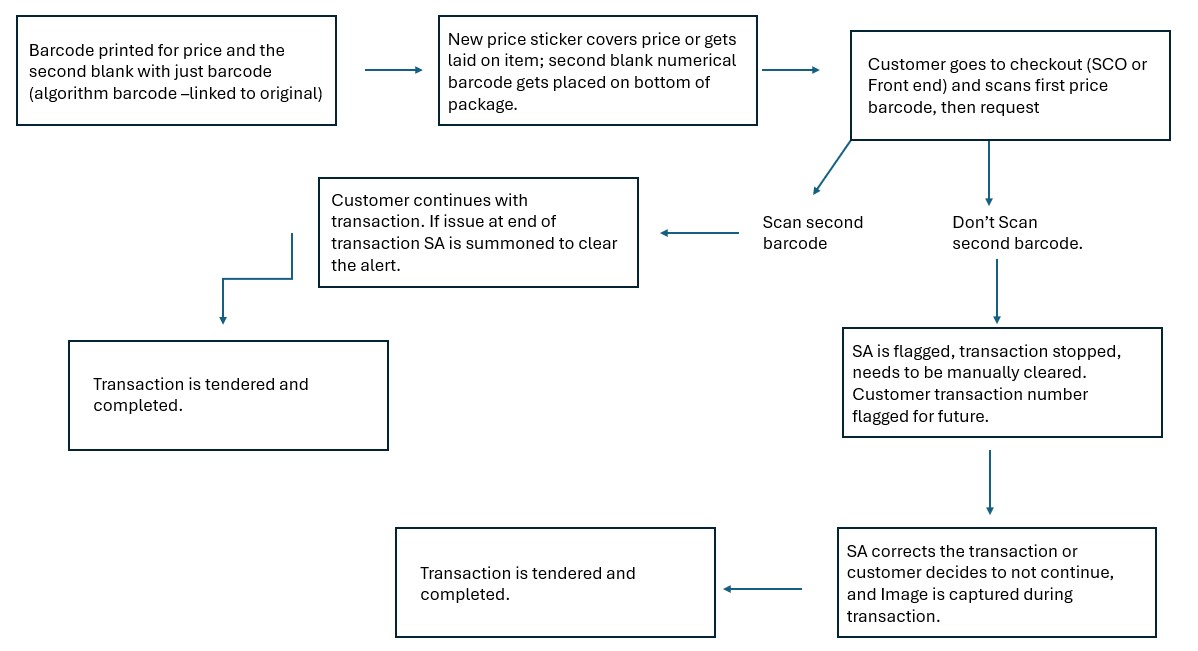
A code change would be implemented to involve an algorithm that would print out a randomized key for the second sticker that would be placed on the bottom of an item, with zero information on it. The first sticker would have all the info and pricing and when it was going to check out, the customer or the cashier would have to scan both the price listed and the secondary barcode to verify the price. If it does not match, the transaction would be flagged for the Sales Associate to be called over and correct the transaction. If needed, the secondary barcode could appear on the handheld if needed for the Sales Associate to correct the behavior by generating the correct 2-part verification identifier. This change in code and change in price sticker printing with a 2-key function randomizer would allow the Retailer to markdown items or even sticker regular items and be able to keep customers/thieves honest. The current Pricing module would print out the price for the item, with a secondary barcode which would have nothing but a generated number sequence that would match the price barcode. This would create a 2-factor authentication for the product in question. If a consumer tries to switch tags or pricing for a product, they will need the secondary barcode to check out and verify the price is the right price for that specific item. The consumer would not know that those barcodes are married and if we find a discrepancy the item would be flagged in the system and prompt an alert to the shopper assistance/Shopper for a manual override. This would help keep shrink and inventory secure.
The following figure demonstrates the idea:
Usages:
This solution can work for any retail business that prices their items whether it is for discounts or for expensive items to help prevent theft at the register. It keeps the Sales Associates engaged and requires them to be complicit in any shoplifting.
Claims:
This idea should help the 2/3 of Shrink that we can control whether it is a mistake or planned shrink. Without the high RFID cost.
TGCS Reference 00911