Authors:
Dan Kelaher, Jerry Guo
Abstract:
The VESA display mounting standard accommodates different size mounting plates via different mounting hole spacings. Most mounting plates on monitor stands and mounts have holes for multiple spacings but this utilizes the space for the largest hole spacing. Some smaller displays may not be able to fit the larger size mounting plates and therefore is not compatible with the larger mounting plates. This document describes a novel rotating mounting plate design that accommodates multiple hole spacing arrangements without requiring extra space on the back of the display.
Background:
Today visual displays are often mounted on stands that comply with the VESA standard. This standard defines several sets of mounting holes on the rear of displays and the location of mounting devices’ fasteners. Most VESA complaint stands will have multiple hole patterns, sized to the largest hole pattern. When a smaller display where the mounting holes are limited to a smaller hole pattern (eg, 75mm hole pattern) is mounted on a 3rd party stand that accommodates several hole VESA hole patterns (eg 75mm and 100mm holes) the stand may not be compatible with this device. In the market now there are conversion or adapter plates that stands that enable mounting a display with a larger hole pattern to a device that has a smaller hole pattern. However there is no way to use a larger hole pattern mounting stand for a display with a smaller hole pattern.
Description:
Our invention includes a rotating plate and static plate pinned together at the center. The rotating plate has 4 arms that are pinned to the plate at one end and have a hole at the far end which aligns with the mounting holes on the display. In the position that enables the largest hole pattern has the arm in line with the center of rotation of the rotating plate. For smaller hole patterns, the rotation plate is turned to reduce the distance between the center of rotation of the plate and mounting hole.
The following figure demonstrates the idea. The larger display on the left uses a larger VESA hole pattern so the mounting plate’s arms are aligned with the center of the plate. On the smaller display to the right, the mechanism is rotated, thereby shortening the distance of each hole to the center of the plate, accommodating smaller VESA hole patterns.
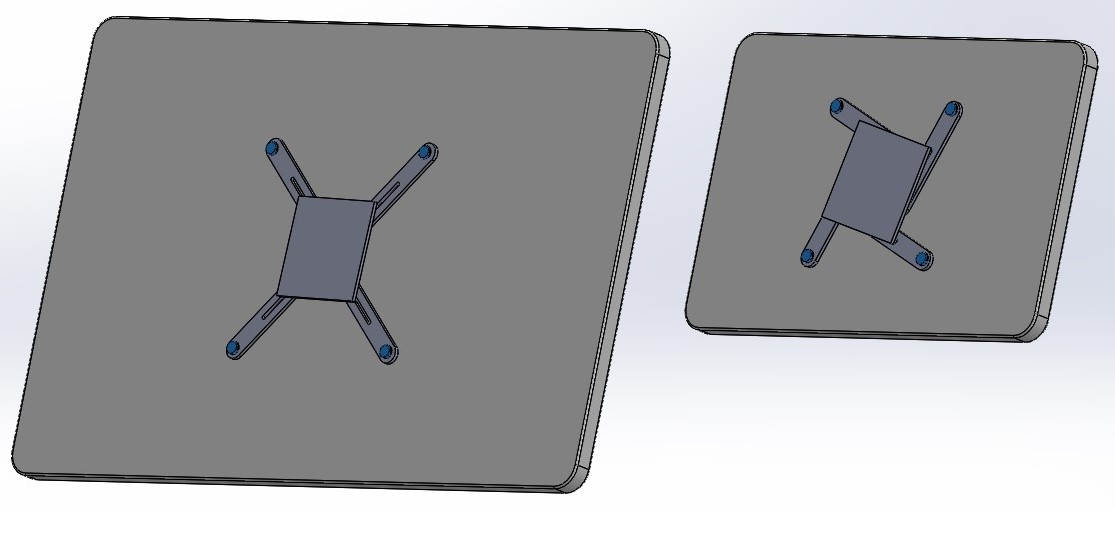
The following 2 figures show the opposite side view of the assembly, showing the pins and slots and how they interact to accommodate smaller VESA hole patterns.
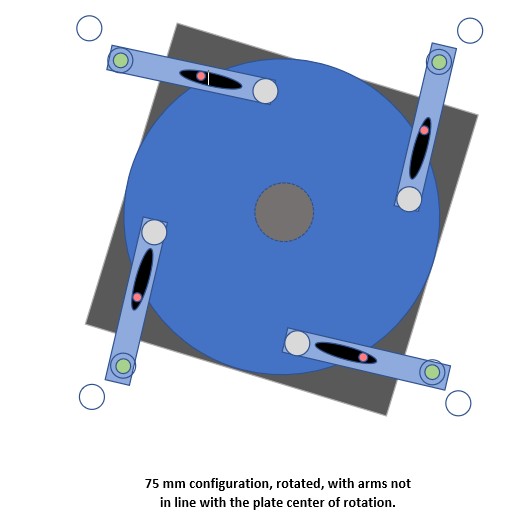
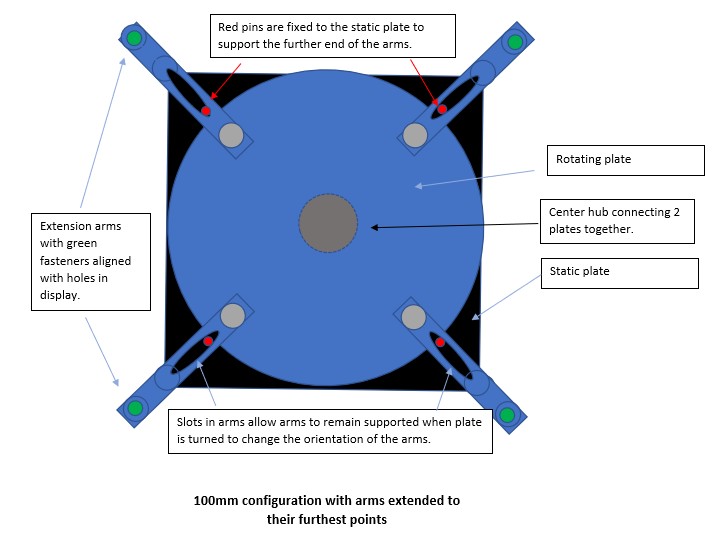
Existing Art:
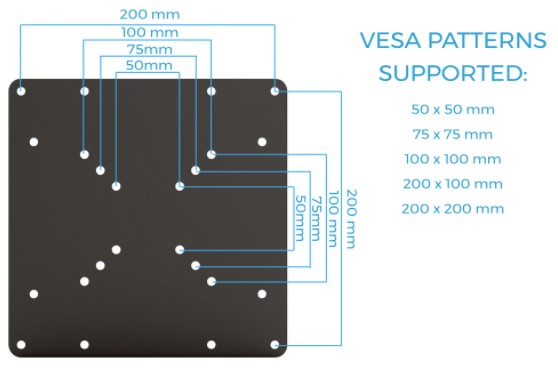
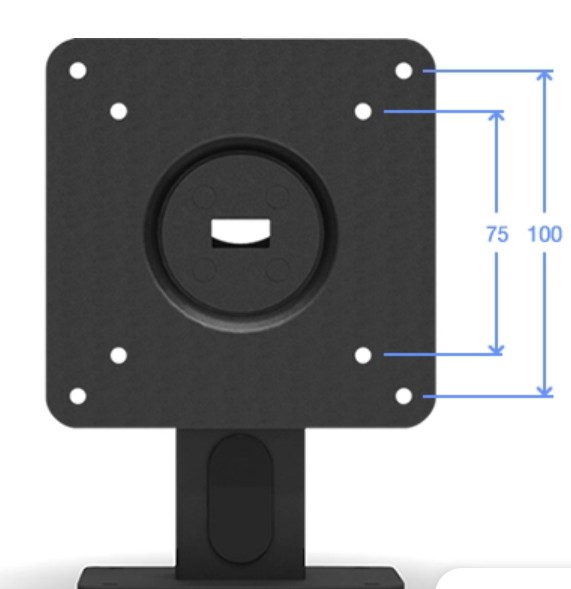
Products exist in the market that can mount to different size VESA mounting patterns as shown below. They are typically static plates with multiple sets of VESA mounting holes. However, none of them will shrink to the smallest size VESA pattern accommodated. For example, while the adapter plate below has holes for 75x75mm VESA mounting solution, if the display being mounted has a recessed hole pattern and cannot allow a larger plate connected to the back of the display, this solution can not be used.
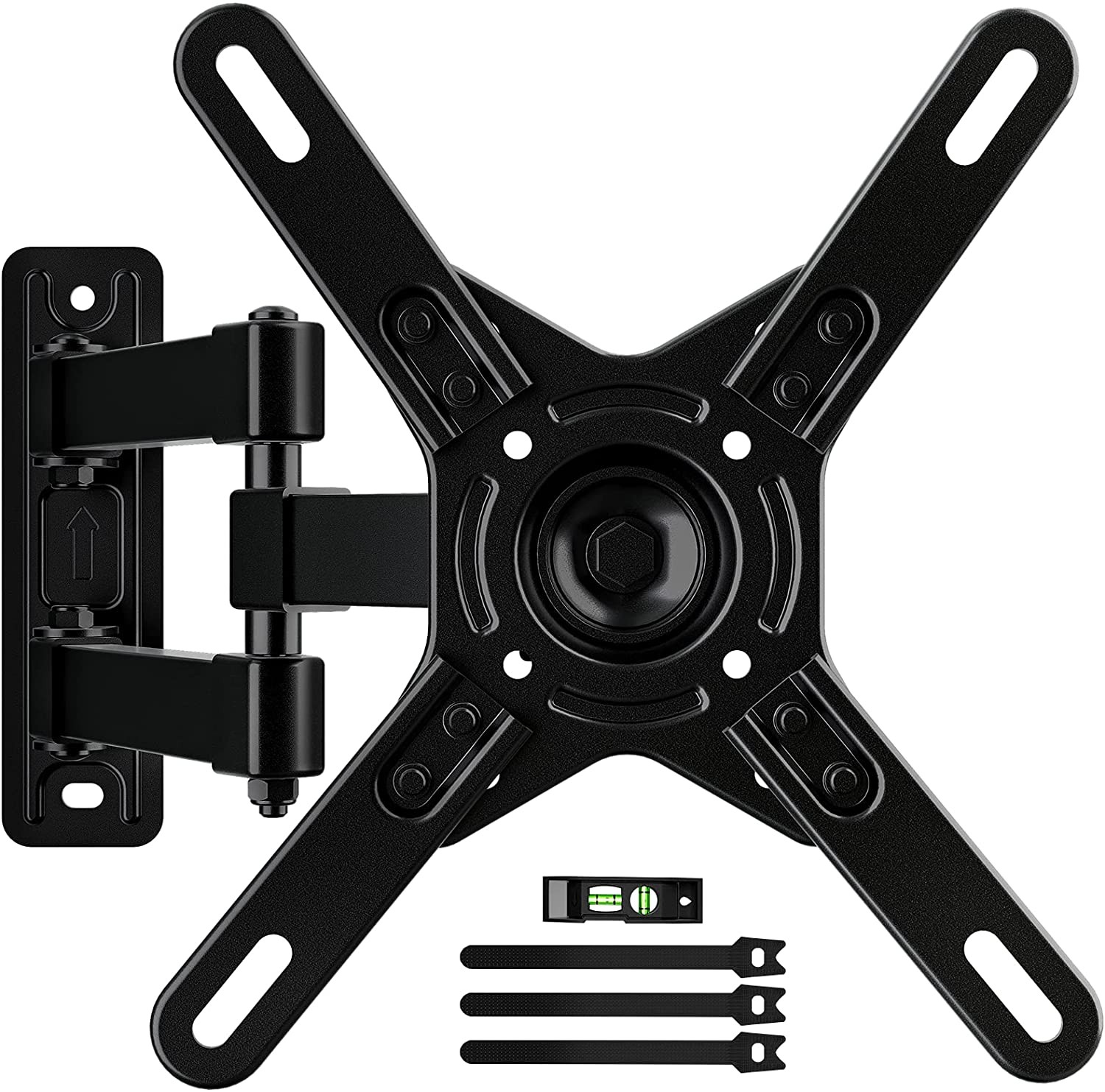
The device below is similar to our idea in that it has arms that can be shortened or retracted. However, this solution requires tools and parts can get lost. Our idea does not require tools and does not remove or add any parts to the assembly for use on different sizes. The reduction in the distance from the center of the mounting plate to the individual screw holes is made by the rotation of the 2 plates.
TGCS Reference 2566