
Authors:
James Dunbar
Abstract:
This disclosure proposed a device that will replace the plywood, pallet and pallet jack currently used to move and install the TGCS System 7 self-checkout system.
Background:
The System 7 self-checkout system is large, heavy and does not incorporate castors for moving around the manufacturing area or delivery to customers. Current method is to strap the System 7 onto a sheet of plywood which is fastened to a pallet which is moved with a pallet jack.
Description:
1) Reduces the floor space required in manufacturing area as well as on trucks compared to current pallet method.
2) Removes the need to manhandle the Self-Checkout product off a pallet thereby reducing a potential tip hazard.
3) Remove the need for customers to have pallet jacks on hand. This is an issue for smaller customers.
This device combines two commercially available technologies into a configuration that will yield the advantages stated above. The mobility device consists of a base like that used to move power tools in the home workshop but sized to fit System 7 and modified to allow mounting of two mini-conveyors (see Fig 1 below). The conveyors can utilize rollers, ball transfer or skate wheel design (see Fig 2 below) and will be mounted to the base using a camming or lever action.
During the manufacturing process the System 7 will be placed onto the mobility base with the swivel castors in the raised position and rubber feet/snubbers in contact with the floor. The conveyors are placed in the lowered position allowing the System 7 feet to rest on a solid surface on either side of the conveyors. To move the machine to next workstation the swivel castor cam handles are depressed so all four castors are active allowing machine to be pushed.
When it is time to remove the System 7 from the mobility base the swivel castor cams are released allowing the weight to rest on the rubber feet/snubbers. Next the conveyor cams are activated which will raise the conveyors and lift the System 7. It may be helpful if one end of conveyor raises higher than the other to facilitate unloading. The System 7 can be pushed off the mobility base until it touches the floor. At this point the swivel castors cams are depressed which will allow the mobility base to be slid out from under the System 7.
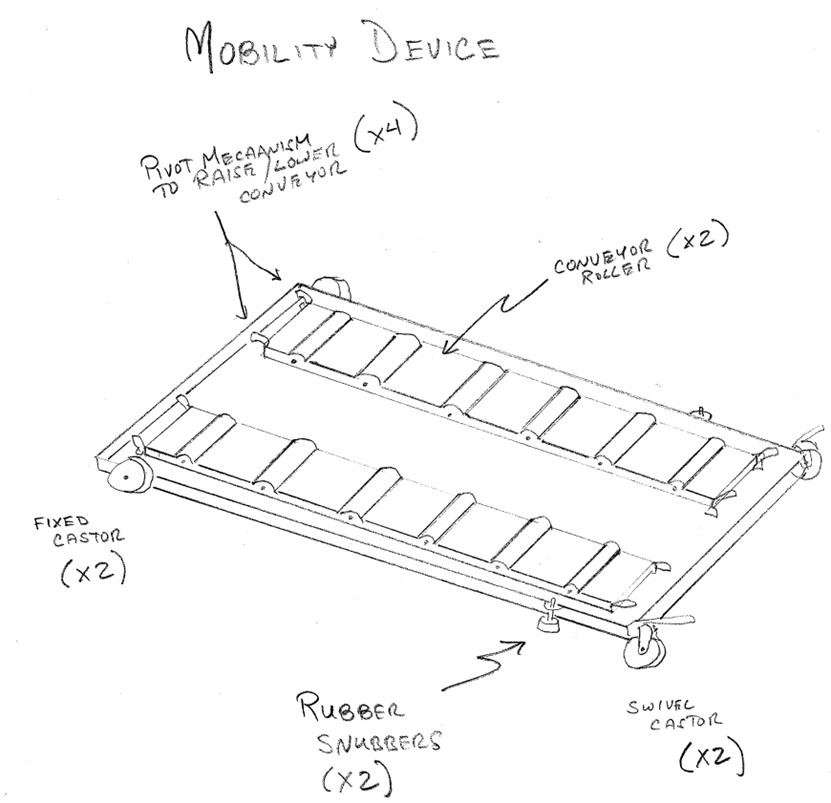
FIG 1
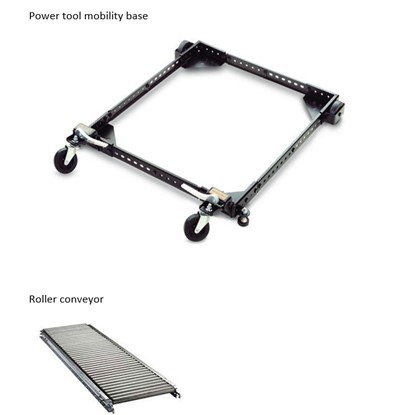
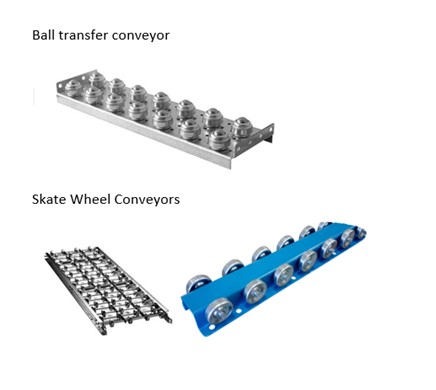
FIG 2
TGCS Reference 1694